

Learning history interactively begins with a question: what would you have done? HistroQuest places you in a historical situation. Discover what people were trying to achieve, which difficulties they faced and what options they had. Then it is your turn. Make a decision, explore a map or complete an activity. Afterwards, the story reveals what actually happened.
The app connects storytelling with thinking for yourself. Rather than simply collecting names and dates, you explore causes, decisions and consequences. Here is how the concept works and how you can get started on your iPhone or Android phone.
A history learning app with a clear idea
Historical events can seem inevitable when we look back. We know the outcome and can easily forget that the people involved did not. They had to act with incomplete information, limited time or conflicting interests.
This is where HistroQuest begins. A story first introduces the situation. The next activity focuses on an important connection. Consider your own answer before discovering the historical outcome. Your response opens the way to an explanation: why was an option sensible? Which difficulty was underestimated? What consequences did a decision have?
1. Clio introduces the situation
Clio guides you through the illustrated stories. Read her explanation or listen to the audio. Images show the historical world; maps help you place locations and spatial relationships. The text explains what is happening and why it matters for the next step.
You do not need a history degree to begin. The introduction gives you context so that you can take an active part. Instead of studying a whole period first, examine a particular situation. Who is involved? What is at stake? What limits do distance, supplies, alliances or available information impose?

2. Make a decision or complete an activity
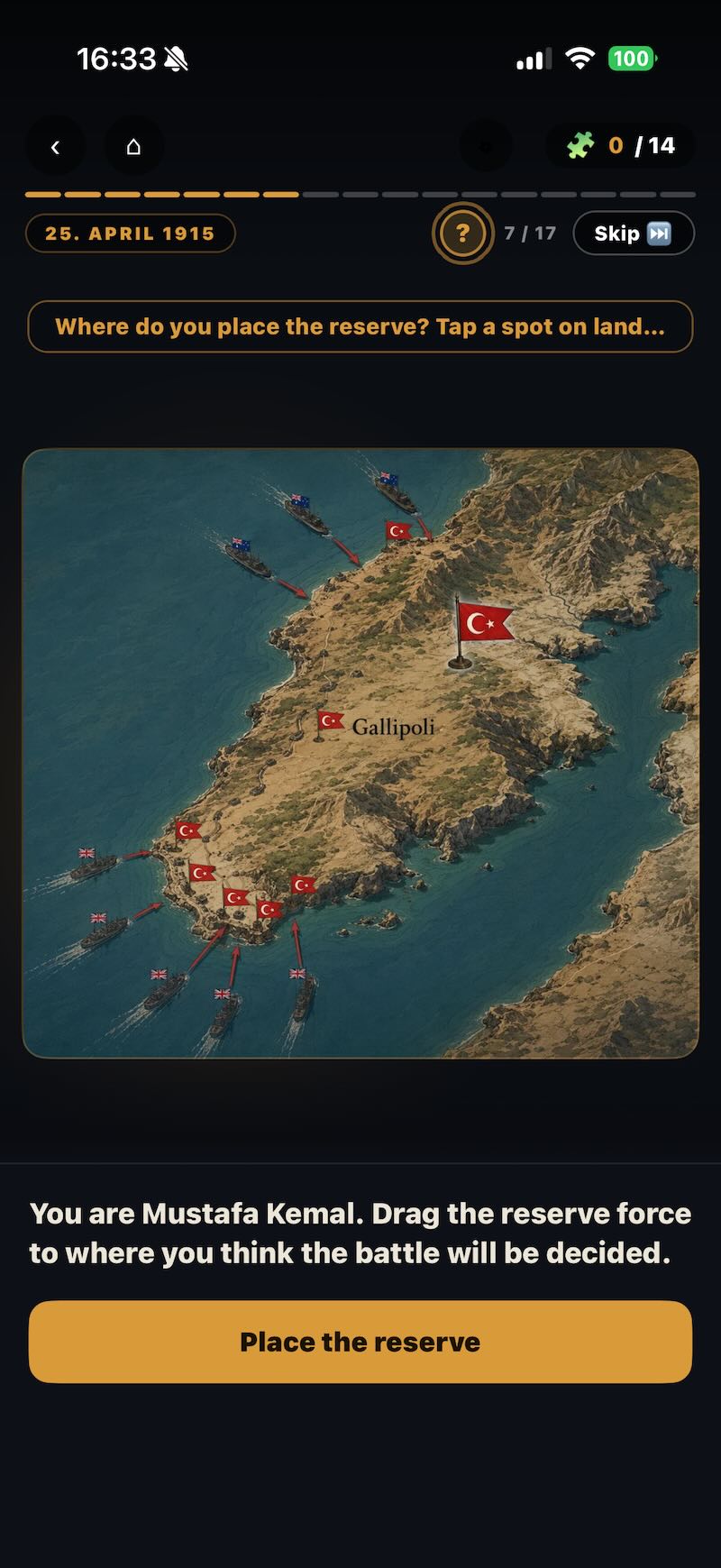
Now move from listening to acting. Which answer fits the situation? How large might a particular quantity have been? Which position on a map makes sense? Different activities explore different aspects of the story.
An estimate makes relative quantities easier to picture. A map activity draws your attention to terrain, distances or connections. A decision lets you weigh possible consequences. The activity grows out of the narrative. It gives you a specific reason to examine the historical conditions more closely.
If an answer does not fit, hints help you try again. Check your reasoning and continue. The aim is to understand the connection. You do not need to know every historical answer before you start playing.

3. Discover the historical outcome
The story continues after the activity. Find out what happened and compare it with your own reasoning. Your game and the actual past remain clearly distinguishable. Your decision does not rewrite history.
This comparison is at the heart of the concept. Your idea might have been plausible but failed because of a condition you overlooked. The explanation may reveal why people chose a particular course of action. An individual fact becomes a question about causes and consequences.
Maps, games and quizzes belong to the narrative
HistroQuest connects the steps into a learning sequence: story, relevant activity, explanation and next section. A chapter quiz lets you check what you remember. Try to explain the reasoning behind an answer in your own words as well.
The app is for curious people who want to explore historical connections. Read, listen and take an active part. English and German are available. Choose a topic that interests you and try the experience before setting yourself a larger learning goal.
Your playthrough can also be a starting point for further questions. Which term was new? Which development would you like to explore in more detail? Recall the most important decision afterwards. Your interest in history can stay connected to an understandable situation instead of ending with a list of separate facts.
Start with HistroQuest for free
HistroQuest is available in the App Store and on Google Play. The stories and games run in the installed app. This website introduces the concept and links to the appropriate download.
Try a free story first. Further content is available through Premium. The app shows which stories are free and which subscriptions are offered. During your first playthrough, take a moment to consider your own reasoning: what would you do, and why?
Download HistroQuest for iPhone · Download HistroQuest for Android
For more ideas on getting started, read Learn history online: getting started with an app.
0 comments